
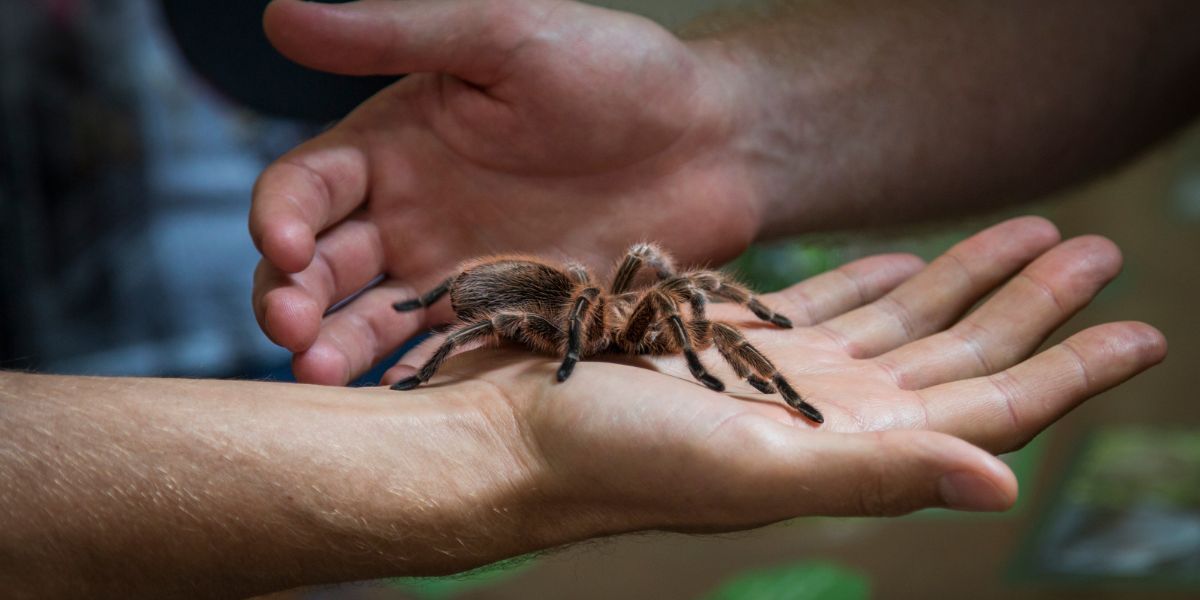
Peruvian authorities intercepted two German citizens and one Polish citizen at Jorge Chávez International Airport in Lima after finding more than 3,000 live tarantulas packed inside socks in three suitcases bound for Germany.
The seizure, carried out by the National Forest and Wildlife Service (SERFOR) working with customs, followed an anonymous tip and an intelligence operation.
The travellers were preparing to board when officials stopped them after authorities received an anonymous tip about the suspected wildlife trafficking operation.
Inside the luggage, officers found dozens of labelled socks containing tarantulas at every stage of development (eggs, spiderlings, and adults). Some of the animals were still moving.
“We noticed that some of them were moving. There were small ones and large ones,” said Cora Suárez, a SERFOR wildlife control technician at the airport.
The spiders came from several Peruvian regions, including Junín, Loreto, Cajamarca, Cusco, and La Libertad. Identified groups include the genus Pamphobeteus, Thrixopelma lagunas, and members of the Antikuna and Avicularia groups. Some specimens may belong to species not yet formally described by science. One, Pamphobeteus antinous, is listed as vulnerable under Peru’s national protected-wildlife rules.
Authorities believe the spiders were destined for collectors, research, or the exotic pet trade in Europe. A single tarantula can sell for roughly €500 (about $809.95 Australian Dollar), putting the shipment’s potential value near €1.5 million (2,429,850 Australian Dollar). The three suspects were detained by police specialising in environmental crimes and face criminal proceedings. Police seized the spiders before they left the country and are identifying, evaluating, and transferring them to an authorised breeding facility.
Illegal wildlife trafficing is more common than what many might think, the AFP shares that
“Illegal wildlife trafficking is a highly lucrative criminal activity that generates around $20 billion annually worldwide, according to Interpol.
Such trafficking is among the primary causes of the loss of biodiversity on the planet.”
Authorities are still investigating the travellers, and species identification of the full haul continues.